Friday, June 29, 2018

Metro 2033

Metro 2033 is a Post-Apocalyptic Survival-Horror and First Person Shooter video game based on the novel of the same name, Metro 2033, by Russian author Dmitry Glukhovsky. The Ukrainian developing company, 4A Games, and former publishers of the series THQ collaborated with Dmitry Glukhovsky to create a digital rendition of his novel for the Xbox 360 and PC platforms. Originally, the game was to be released with the subtitle: The Last Refuge, but the subtitle was later cancelled.


Metro 2033 is a straight shooter occurring in the Post-Apocalyptic Metro System of Moscow, 20 years after the staggering World War III. In-diversion, the player takes control of a man named Artyom who must advance through the aggressor, changed, and paranormal risks of the dim metro, on the off chance that he is to spare his home station from another mutant danger originating from the surface. 

As a matter of first importance a First Person Shooter, along the way the player must utilize a huge number of dystopian themed weaponry to execute a wide assortment of adversaries. Battle is for the most part between two structures, that of shootouts with human rebels having a place with the Moscow Metro's different activist groups - and that of gunplay with savage transformed animals that chase and close in on Artyom for tense snapshots of short proximity battle. Weapons in this amusement primarily comprise of stopgap and unrefined, yet compelling weapons. Survival is a fundamental subject of the amusement, and keeping in mind that peril is dependably around the bend, the rummaging and protection of ammo in and between snapshots of battle end up indispensable. The diversion has a few sorts of ammo that for the most part fall into two classes: the consistent rounds, which are filthy slugs made in the metro, and military-review rounds, which were produced before the war. These military review rounds release higher harm yield as well as fill in as the amusement's money for when Artyom is acquiring things in a significant number of the diversion's protected stations. This requires the player to settle on savvy choices in the matter of when, where, and how they utilize their ammunition and furthermore when to set up their ammunition. 

Metro 2033 utilizations an extremely constrained heads up show (HUD) component to keep to a more "sensible" and "immersive" experience. As opposed to utilize a wellbeing bar, blood splatters on the screen show how much harm is being perpetrated on Artyom, and his gas cover will haze up in radioactive zones, indicating Artyom with reference to what extent until the point when another channel is required. With a specific end goal to survive, the player should continually know about the diversion's unpretentious markers. Artyom must utilize a wrist watch to know to what extent he can utilize channels for, or when the player needs to check their heading, they should check a compass. 

The diversion is narratively determined, in that consistently the player is looking to advance through the amusement's level to achieve another portion of the diversion's story. The amusement, in any case, highlights two endings that are given to the player in light of a concealed arrangement of Moral Points, which unobtrusively compensate players for carrying on selflessly or with interest - generally without them notwithstanding acknowledging it. Along these lines stealth comparatively, assumes a vital part in gameplay. Because of the way that Artyom is as often as possible dwarfed or, later on, without anyone else, almost all human-based levels highlight backup ways to go that can be utilized to sneak past adversaries, and safeguard not simply ammo, but rather adversary lives. In the event that Artyom does not shed blood unnecessarily, the player is probably going to be remunerated.


Thursday, June 28, 2018

Counter-Strike

Counter-Strike (also marketed as Half-Life: Counter-Strike) is a multiplayer first-person shooter initially created by Minh Le and Jess Cliffe as a mod for Half-Life. By the fifth beta, Valve Software started actively participating in the development and ultimately bought the rights to the game and offered the original developers jobs at the company which both of them accepted.

After about a year in Beta stages, the first full release of the mod was published on November 9, 2000 and the game was also available at retailers in North America shortly thereafter, on November 14, 2000.

Since the creation of the franchise, various sequels and spinoffs have been created, such as Counter-Strike: Condition Zero, Counter-Strike: Source, and the latest in the series, Counter-Strike: Global Offensive.


The quick paced and group situated gameplay of Counter-Strike has stayed moderately the same consistently. In it, two groups, the Counter-Terrorists and the Terrorists, battle to finish a goal or wipe out the restricting group. Albeit fundamental, it is viewed as a standout amongst the most progressive web based diversions ever. The first Counter-Strike came solely with multiplayer, without PC controlled players. After some time, in any case, a few server-side adjustments have included bots for in-diversion utilize and bots were authoritatively presented in its later successors, Counter-Strike (Xbox) and Counter-Strike: Condition Zero.

Counter-Strike includes a vast assortment of maps that occur in various situations including urban, ice, wilderness and desert settings. Amid the post-beta stages, maps were as yet turned in the official circulation on a marginally littler scale. Since the arrival of Counter-Strike 1.6, no maps have been included or expelled from the diversion.

It ought to be noticed that the greater part of maps for the amusement were made by individuals that were initially just specialist mappers. At the point when Valve Software later purchased the rights to Counter-Strike and its substance these turned into the principal works distributed at retail for a significant number of the level designers.

Counter-Strike includes an assortment of weapons, running from blades to shotguns and submachine firearms. The weapons for Counter-Strike were picked essentially in view of two criteria. For one, the weapons must fulfill to utilize and they needed to look and sound cool. The other criteria was authenticity and what weapons the groups would probably be utilizing as a part of reality. The previous of these criteria was given more weight than guaranteeing authenticity.

Motivation for potential weapon hopefuls were taken from different movies. For instance, the film Ronin roused the incorporation of the Krieg 552 and M249. Further motivation was additionally taken from the motion pictures Air Force One and the Professional.

The majority of the data with respect to the weapons themselves was sourced from the web or from firearm magazines. Because restricted data was accessible in regards to a portion of the weapons, Minh Le needed to think about how a few weapons could have worked while enlivening them and therefore a couple of weapon models show contrasts when contrasted with their true counterparts.

Counter-Strike outstandingly includes left-gave weapon see models. These models were made as left-gave in light of the fact that the maker of these models and the primary man behind Counter-Strike, Minh Le, is left-given and subsequently favored vitalizing the weapons from that side. The diversion includes a probability of changing the models to right-gave, yet as the models are basically reflected from their left-gave partners they sport a few mistakes when contrasted with their genuine partners.


In case you want to start playing this game you can download Counter-Strike 1.6!

Half-Life

Half-Life, adapted as HλLF-LIFE, is a sci-fi first-individual shooter created and distributed by Valve. The player takes the viewpoint of researcher Gordon Freeman. Planned at first for Microsoft Windows and later brought to different stages, for example, PS2 and OS X, the diversion utilizes a vigorously changed rendition of the Quake motor, called GoldSrc.

In Half-Life, players accept the part of the hero, Dr. Gordon Freeman, an ongoing MIT graduate in hypothetical material science, and furthermore an ongoing representative at Black Mesa. After an examination that goes awfully astray when a surprising Resonance Cascade (an obviously totally invented event) tears dimensional creases that decimate the office, Gordon must battle to get away from the now outsider swarmed office as animals from a different universe — known as Xen — accordingly enter in regularly expanding numbers through these dimensional creases.

The amusement is set amid May 200-in a remote zone of New Mexico, USA at the Black Mesa Research Facility; an anecdotal complex that bears numerous similitudes to both the Los Alamos National Laboratory and Area 51.

As Freeman attempts to advance out of the demolished office to discover help for the harmed, he before long finds he is gotten between two sides: the unfriendly outsiders, and the Hazardous Environment Combat Unit, a military power dispatched to conceal the occurrence — including wiping out Freeman and whatever is left of the Black Mesa Science Team. All through the amusement, a secretive figure known as the G-Man frequently shows up, obviously checking Freeman's advance. At last, Gordon utilizes the collaboration of surviving researchers and security officers to work his way to the secretive Lambda Complex, where a group of researchers transport him to the outsider world Xen, where he should crush the Nihilanth, the animal keeping Xen's side of the dimensional break open.

A large portion of Life's plot was initially propelled by the PC amusements Doom and Quake (both created by id Software), Stephen King's novella The Mist, and a scene of The Outer Limits called "The Borderland". Valve's in-house essayist and writer, Marc Laidlaw, who composed the books Dad's Nuke and The 37th Mandela, later created and extended the plot. In any case, the most particular part of the diversion isn't simply the plot, but instead the way it is exhibited to the player.


The diversion recounts the story by streaming into scripted groupings that are incorporated as a major aspect of the amusement instead of as cutscene interludes. These arrangements run from the presentation of real plot focuses, for example, the Resonance Cascade to bringing the player into an especially troublesome piece of a level. Two of the planned consequences of this style of introduction were to expand drenching and to keep up a ceaseless account that keeps the player's enthusiasm all through. This varied from diversions at the time, making Half-Life unmistakable, and characterizing traditions that would keep going for quite a long time to come.

Valve executed different elements to increase the sentiment of drenching, for example, keeping the player from seeing or hearing their own character, who remains a quiet hero all through the amusement, and guaranteeing that the player once in a while loses the capacity to control Gordon, notwithstanding amid monologs. This steady understanding of the diversion enabled players to absolutely satisfy and alter, nearly, the part of Gordon, while telling them their identity playing as. The scripted groupings keep up stream by keeping the player inundated in the amusement, though cutscenes in other contemporary recreations had frequently been a redirection from past sections of gameplay. The levels for Half-Life were likewise isolated into little segments to limit long interferences from stacking.


Wednesday, June 27, 2018

Borderlands 2


Borderlands 2 was formally declared on August third, 2011. The diversion was discharged on September 18, 2012 in the United States, September 20, 2012 in the Australasia area and September 21, 2012 globally. Borderlands 2 was worked in Unreal Engine 3 and utilizations PhysX innovation. It was declared by Randy Pitchford,Gearbox CEO, that the amusement sold more than 12 millions units by March 2015 on all stages.

Set five years after the occasions of Borderlands; Handsome Jack, the amusement's fundamental adversary, has assumed control over the Hyperion Corporation, pronounced himself Dictator of Pandora and assumed the greater part of the praise for finding the Vault - going so far as to guarantee obligation regarding slaughtering the Destroyer. Jack has additionally rubbed out a significant part of the light on the planet by having a monster circling H-molded base set before Pandora's stationary moon, making a 'major sibling' air all through the planet. The new gathering of Vault Hunters in Borderlands 2 are entrusted with slaughtering Jack and returning peace to Pandora.

Borderlands 2 starts with the heroes on a prepare to an unspecified area to start their look for the vault. The prepare ends up being a trap set by Handsome Jack, to murder all who look for the Vault. The Vault Hunters shield themselves sufficiently long to achieve a prepare auto loaded with explosives and a 'sham' Handsome Jack look-a-like. The explosion makes the prepare crash in the Arctic Wasteland, with our new group strewn over the destruction. The amusement gets with the Vault Hunters awakening to Claptrap burrowing through the remaining parts. The strange Guardian Angel at that point reaches them and clarifies that Handsome Jack must be murdered, guiding players to safeguard the four unique Vault seekers from Hyperion's grasp to achieve this.

Every one of the four of the first Vault Hunters return in the spin-off as NPCs, playing a critical part amid the fundamental storyline and offering discretionary missions that proceed with their own story.

You can buy Borderlands 2 on Steam.

Overwatch

Overwatch is a multiplayer first-person shooter video game developed and published by Blizzard Entertainment. It was released in May 2016 for Microsoft Windows, PlayStation 4, and Xbox One. 

The game is highly stylized team-based shooter set on a near-future Earth. Every match is an intense multiplayer showdown pitting a diverse cast of heroes, mercenaries, scientists, adventurers, and oddities against each other in an epic, globe-spanning conflict.


Overwatch is Blizzard's fourth major franchise in nearly two decades, after Warcraft, Diablo, and Starcraft. The idea of Overwatch was born following the cancellation of the massively multiplayer online role-playing project game named Titan in 2014 after seven years of development. A portion of the Titan team brought forth the concept of Overwatch based on the success of team-based first-person shooter games and the growing popularity of multiplayer online battle arena games, along with the design aesthetic inspiration from Hearthstone: Heroes of Warcraft, which resulted in a hero-based shooter that emphasized teamwork. Some elements of Overwatch borrow assets and concepts from the canceled Titan project.

Overwatch was revealed at BlizzCon 2014 of every a completely playable state. Its shut beta started on October 27, 2015 and finished on April 25, 2016, in the middle of it went down briefly from December 10, 2015 to February 9, 2016. Its open beta started on May 2, 2016 for pre-buy purchasers, and May 4, 2016 for anybody and finished on May 10, 2016, despite the fact that it should end on May 9, 2016. The open beta attracted in excess of 9.7 million players and turned out to be broadly foreseen. The arrival of the amusement was advanced with short vivified recordings to present the diversion's account and every one of its characters.

As Overwatch is a web based amusement, reassure clients require a membership to either PlayStation Plus or Xbox Live Gold (contingent upon the support) to play the diversion.

Overwatch highlights group based battle coordinates between two contradicting groups of six players each for its standard modes, Quick Play, and Competitive Play. Players pick one of an extensive variety of legend characters, each with their own particular remarkable capacities and part classes. The diversion supports the collaboration among colleagues and the harmony between group parts to accomplish the targets given for each group by giving tips and group tips amid the setup, and enable players to change to different saints in the bring forth room (as long as it withstands the legend stacking guideline).

At the point when the match is occurring, if the player quit for any reason which isn't started by the server, this episode will be considered leaving mid-diversion and may summon the Leaver Penalty. The diversion likewise tracks player's action in amusement and presentations it on a meter, to be specific "ablaze Meter". It will be filled step by step if the player makes activities, for example, fruitful assaulting, mending, challenging and catching the goal and will gradually drop if no group contributing activity is made. At the point when a specific limit is achieved, the player character's symbol will be "ablaze", speaking to that the character is a danger to the foe group, however generally does not straightforwardly influence gameplay.

At the finish of each match, the amusement thinks about among best minutes from all players in that diversion and replays for all players the best one from a particular player as the "Play of the Game". Up to four individual accomplishments for four players on the two groups are then featured and players are given the choice to choose one to advance. From that point forward, the experience which the player increased through the span of the diversion is shown. In a focused match, increased Competitive Points and ability rating change will likewise be appeared.

Overwatch additionally has other play modes. Since the discharging of the diversion, every week a Weekly Brawl had been presented, which gave players exceptional ruled matches every week. Afterward, Weekly Brawl was evacuated and its successor, Arcade was presented. Fight run amusements are currently contained inside Arcade, as are new diversion modes Mystery Heroes and Elimination, which are for littler size group matches. Other play modes, for example, playing against PC AI or custom diversions additionally exist to take into account the gamer's need. With the presentation of the Game Browser, Overwatch gives players another strategy to look and partake other individuals' custom diversion effortlessly.

Overwatch brought the arrangement of an occasional occasion into the diversion when Summer Games was presented in August 2016. From that point forward, every occasion has brought an extraordinary kind of gameplay, restricted things and maps to players.

BioShock

BioShock was released on August 21, 2007 in North America, and on August 24 in Europe and Australia, with a standard edition and a limited edition. The Mac OS X version of the game was published by Feral Interactive and released on October 22, 2009.

BioShock is a "genetically enhanced" action-adventure, horror-themed first-person shooter by Irrational Games. While exploring the underwater dystopia, Rapture, the player is urged to turn everything into a weapon: biologically modifying their own body with Plasmids, hacking devices and systems, upgrading their weapons, crafting new ammo variants, and experimenting with different battle techniques are all possible. The philosophy, architecture, and society of Rapture were strongly inspired by the works of Ayn Rand, especially the novel Atlas Shrugged. The game itself is described by the developers as a "spiritual successor" to their previous PC title System Shock 2. BioShock received high praise in critical reviews for its atmospheric audio and visual quality, absorbing and original plot, and its unique gaming experience.

BioShock takes place in 1960 in the middle of the Atlantic Ocean, where Jack, sole survivor of a plane crash, discovers the entrance to the recluse underwater city of Rapture, at the end of a civil war which left most of this utopia in disrepair. Finding himself in an alien world, he has no choice but to fight for his survival against the Splicers, degenerated citizens addicted to the genetic material known as ADAM, and all the traps laid down by the city's visionary founder, Andrew Ryan. His only help lies in Atlas, a revolutionary man seeking to escape safely to the surface with his family.

At the start of the game, the protagonist Jack is a passenger on an airliner which goes down in the Atlantic Ocean in 1960, sometime after ordered society in Rapture has collapsed. After surfacing, Jack finds himself the only survivor of the crash, and swims to a nearby towering lighthouse on an island. He finds there a bathysphere which descends him into the ocean's abyss and the entrance to the underwater city of Rapture. An Irishman, Atlas, assists Jack in making his way to safety via the service radio found in the submarine vessel. Andrew Ryan, believing Jack to be an agent of a surface nation, uses Rapture's automated systems and his pheromone-controlled Splicers against him. Atlas tells Jack that the only way he can survive is to use the abilities granted by Plasmids, and that he must kill the Little Sisters- accompanied by their hulking, armored protectors, the Big Daddies- to extract their ADAM. Inadvertently crossing paths with Jack, Dr. Tenenbaum urges him to save the Little Sisters instead, giving him a Plasmid that will safely kill the embedded Sea Slugs in each Little Sister, reverting them back into normal girls. Atlas says his wife and child have been hiding on a submarine and directs Jack towards it. Just as Jack and Atlas reach the bay where it is located, Ryan has it destroyed; an enraged Atlas guides Jack on a mission to kill Ryan.

Eventually, Jack confronts Ryan in his office, where the latter is casually playing golf. Ryan reveals a truth that he has pieced together. Jack was actually born in Rapture a mere four years ago, genetically modified to mature rapidly. He is Ryan's illegitimate son by an affair with Jasmine Jolene, an exotic dancer. Ryan further reveals that, after purchasing Jack's embryo, Frank Fontaine designed him to obey orders that are preceded or followed by the specific phrase "Would You Kindly..." Jack was then sent to the surface when the Rapture Civil War started to put him beyond Ryan's reach. When the conflict between Fontaine and Ryan reached a stalemate, Jack was sent instructions to board a flight with a package and to use its contents, a revolver, to hijack and crash the plane near the lighthouse, enabling him to return to Rapture as a tool of Fontaine. Because Jack was Ryan's son, he could freely use Rapture's bathysphere network, which had been locked out to everyone except those within Ryan's "genetic ballpark". Finally, Ryan has Jack kill him, wanting to die on his own terms. With Ryan's death, Jack realizes too late that Atlas has also been using the trigger phrase to control him. Atlas reveals himself to be Frank Fontaine, who faked his death to throw Ryan off his trail and take control of the city, leaving Jack at the mercy of the reactivated security systems. Dr. Tenenbaum and her Little Sisters help Jack escape through the vent system, where he falls and loses consciousness.

When Jack awakens, Dr. Tenenbaum has already deactivated some of his conditioned responses (such as the trigger phrase itself) and assists him in breaking the remaining ones, among them one that would have eventually stopped his heart. With the help of the Little Sisters, Jack is able to track down Fontaine. The mob boss, having been cornered, injects himself with vast amounts of ADAM and becomes an inhuman monster. Jack battles him, eventually prevailing and allowing the Little Sisters to subdue and extract the ADAM from his body, killing him.


Three endings are possible depending on how the player interacted with the Little Sisters, all narrated by Dr. Tenenbaum. If the player rescued all of the Little Sisters (therefore saving their lives), the ending shows five Little Sisters returning to the surface with Jack and living full lives under his care, including their graduation from college, getting married, and having children; it ends on a heart-warming tone, with an elderly Jack surrounded on his deathbed by all five of the adult Little Sisters.

If the player harvested (and therefore killed) all of the Little Sisters, the game ends with Jack turning on the Sisters after defeating Fontaine, presumably killing them all and taking their ADAM. Tenenbaum narrates what occurred, condemning Jack and his actions, voice thick with anger and contempt. Later in the second ending, a ballistic missile submarine[8] carrying a nuclear missile comes across the wreckage of the plane and is suddenly surrounded by bathyspheres containing Splicers. The Splicers kill all hands aboard the sub and take control of it. If the player saved some of the Little Sisters, but killed a fair few as well, the ending is visually identical to the second one, though the tone of Tenenbaum's voice is a sad one, as opposed to an angry one.

Tuesday, June 26, 2018

Far Cry 2

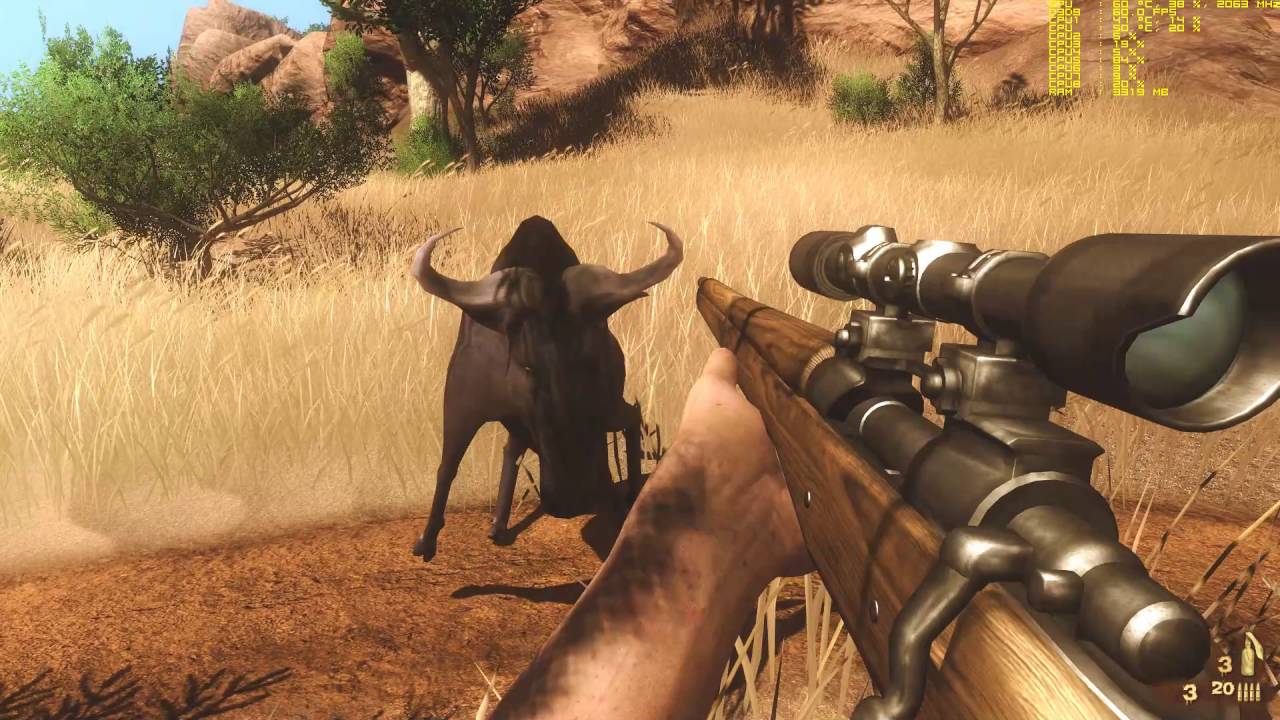
Far Cry 2 (frequently abbreviated FC2) is an open world first person shooter developed by Ubisoft Montreal, and published by Ubisoft. It is the sequel to the original Far Cry, a game produced by developer Crytek. It was released on October 21, 2008, in North America and on October 23, 2008, in Europe and Australia. It was made available on Steam on October 22, 2008. Crytek, the developer of the original Far Cry, was not involved in its development at all as it no longer owns the Far Cry franchise.


The game takes place in an unnamed war-torn African country. The player assumes the role of a mercenary who is sent to the country to assassinate a notorious arms dealer known as the Jackal. When the mercenary contracts severe malaria and botches the assassination, he is forced into working for the warring factions, all-the-while battling his disease malaria and going on a quest to track the Jackal down.

Ubisoft marketed Far Cry 2 as the true sequel to the previous Far Cry, it was deal so they get to make it complete absence of any plot connections between the two games. Far Cry 2 instead features completely new characters and setting. It also features a new style of game play that allows the player to explore the different African landscapes such as deserts, jungles, and savannas. The map is exactly 50 km² (only 19 km² are actually accessible, though). This is an astoundingly large play environment with amazing vista points. It is speculated to be based off Mali, what with its varied landscape, but also through the heavy use of Dogon architecture; the Dogon being indigenous to Mali. As of January 23, 2009, the game had sold 2.9 million copies.


The player assumes the role of a mercenary, who is sent by an unknown organization to the Unnamed African Country (UAC) to assassinate an infamous arms dealer, the Jackal, who is selling weapons to both sides of the conflict, two militant factions: the APR and UFLL. The APR are foreigners trying to unite various countries of Africa, and the UFLL are natives trying to preserve their country from the APR. The player gets into a cab, and enjoys a scenic ride to the only hotel in Pala. The cab driver gives the player a rundown on events happening in the country, and the ride shows how hostile things are becoming. Once the cab reaches the hotel, the player suffers a malaria-induced seizure and passes out, and reawakening in a hotel room. The player finds the Jackal standing over him, reading his mission briefing, but is too weak from his malaria to do anything. The Jackal mocks the player for his incompetence, and then mentions that since the player has failed to kill him, the job is scrapped and the Jackal has no need to worry about the player as he will likely succumb to his illness. He talks to the player about how he doesn't believe in good and evil, only power. He asserts his dominance over the player, and then leaves setting down a pistol and machete. The player wakes up after passing out during his encounter with the Jackal, only to be caught in the crossfire of a firefight between the UFLL and APR. The player is wounded in the battle, but is luckily saved by either a UFLL or APR lieutenant, who employs the player and tells him of a safehouse that he wants cleared out. After the player kills the enemies at the safehouse, he is then tasked with freeing a person that either the APR or UFLL has held captive. The captive becomes the player's first buddy. The player goes down to Mike's Bar and meets up with his second best buddy, and a reporter, Reuben Oluwagembi. Reuben is a war reporter who has covered many wars throughout the African continent, and his work centers around the Jackal. He notes that the Jackal has fueled every war he has covered, and that he had tapes of interviews with the Jackal. He says if the player ever finds those tapes, he should return them to him. Reuben tells the player of a church in Pala that houses a priest named Father Maliya, who is a part of the Underground. Reuben tells him the Father can get him medicine for his malaria. After the player goes to the church to retrieve medicine, the tutorial then ends and the rest of the game starts from there.

To read more about gameplay please visit this website.

Call of Duty 2

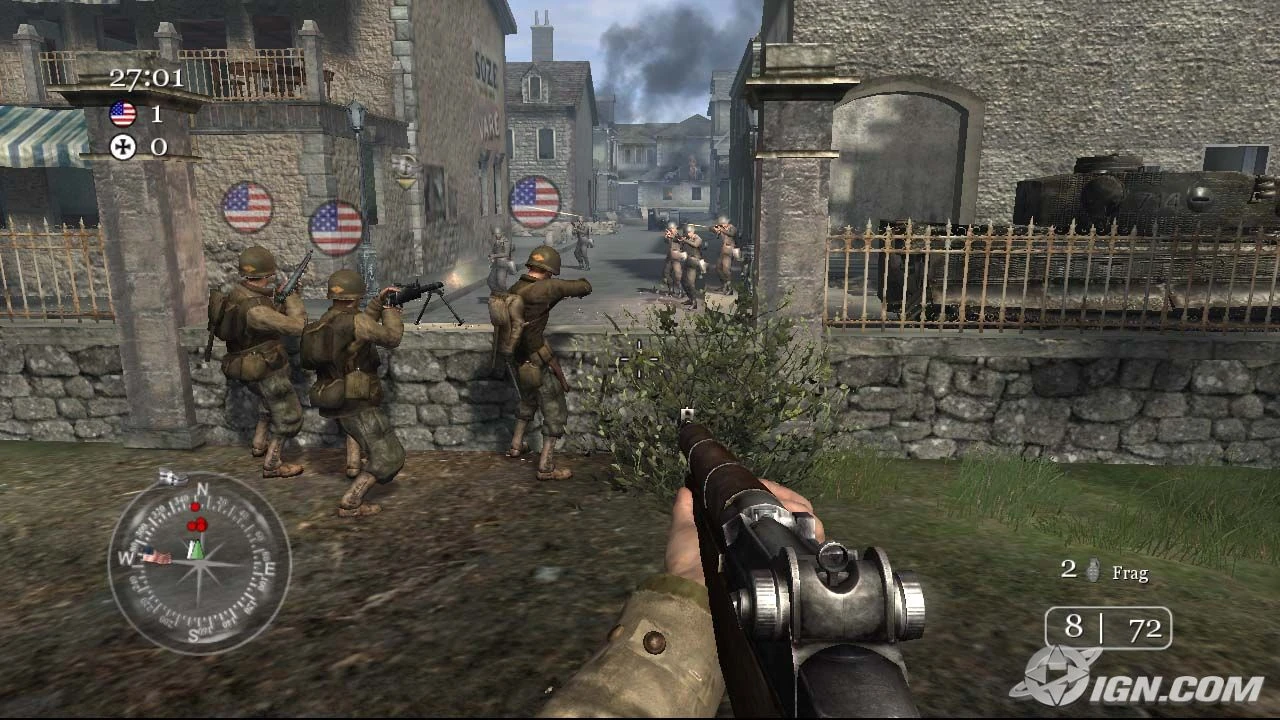
Call of Duty 2 is a first-person shooter video game developed by Infinity Ward and published by Konami in Japan and Activision in the rest of the world. It is the second installment of the Call of Duty series. Announced by Activision on April 7, 2005, the game was released on October 25, 2005, for Microsoft Windows and on November 22, 2005, as a launch title for the Xbox 360. Other versions were eventually released for OS X, mobile phones, and Pocket PCs.


The game is set during World War II and the campaign mode is experienced through the perspectives of four soldiers: one in the Red Army, one in the United States Army, and two in the British Army. It contains four individual campaigns, split into three stories, with a total of 27 missions. Many features were added and changed from the original Call of Duty, notably regenerating health and an icon that indicates a nearby grenade about to explode.

The game drew critical praise, particularly for the graphics, sound and the regenerating health system. As a launch game, the Xbox 360 version sold over 250,000 copies in its first week, and had sold over 2 million copies by January 2008. By November 2013, the game had sold over 5.9 million copies.

Call of Duty 2 is a first-person shooter that has a single-player story mode and a multiplayer mode. The player takes on the roles of several Allied protagonists in specific missions during World War II. The player can crouch and lie prone, and is able to scale low walls and other obstacles. Two firearms can be carried, which can be swapped with those left on the battlefield, and both fragmentation and smoke grenades can also be carried. A gun's iron sights can be used to aim more accurately. A compass on the heads-up display (HUD) shows both allies and enemies, and objective markers to indicate locations the player must reach, areas to defend, or enemy cannons or tanks that the player must plant explosives on to disable. Emplaced weapons such as machine guns and flak cannons are available in some locations to take out enemy troops. In addition, some missions place the player in control of a tank.


The player has a set of binoculars. While it is generally ignored during infantry-limited gameplay, it is vital to the long-range use of the Crusader tanks and one of the missions in which the player must direct artillery fire to defend a town. It is also important for scouting, though most of the game takes place in personal, close combat situations reducing the importance of this tactic.

Should the player take severe damage, the screen will turn red and the sound of the character's heartbeat will increase in volume; this indicates the player's health is low. The player must find a way to stay out of fire to recover before entering battle again or else will die and restart from the last checkpoint. Health is only restored through automatic recharging when the player is not taking fire. Some attacks, such as explosions from grenades or shells, will kill the player instantly if the player is too close.

In April 2006, Infinity Ward released the Call of Duty 2 Radiant, which allows a player to create their own multiplayer or single-player maps. Along with Radiant, the mapmaker includes Maya plug-in support, an effects editor, and an asset manager which allows custom models to be made and imported into the game, as well as custom effects.


Quake III Arena

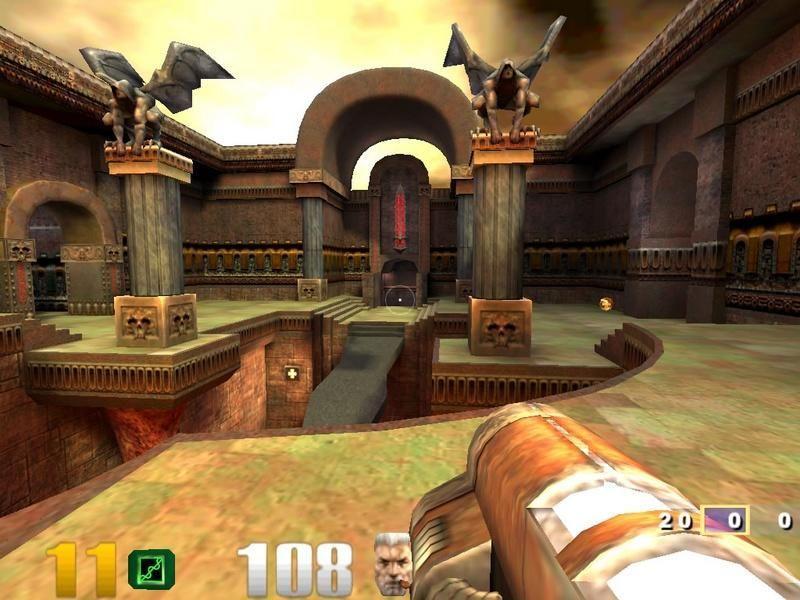
Quake III Arena is a multiplayer-focused first-person shooter released on December 2, 1999. It differs from the other games in the Quake series (not counting Quake Live) in that it sacrifices the Single Player mode to focus on multiplayer. Its Single Player segment is almost identical to multiplayer fights, although other players are replaced by bots.

Notable features of Quake III include the minimalist design, lacking rarely used items and features, the extensive customization of player settings such as field of view, texture detail and enemy model, and advanced movement features such as strafe-jumping that give more speed with greater skill in contrast to the digital, all or nothing design of many computer games.

Note: Unlike its predecessors, Q3A does not have a plot-based single-player campaign. Instead, it simulates the multiplayer experience with computer controlled players known as bots.


Untold centuries ago the Vadrigar, the mysterious Arena Masters, constructed the Arena Eternal for their own infernal amusement. Virtually nothing is known of these beings except that they savor the carnage and clamor of battle. As such, they have stocked the arena with the greatest warriors of all time - and you have just joined their ranks.

As a gladiator in the Arena Eternal, you must not only survive, but also win each and every battle against ever more powerful opponents. Don't worry overly much about getting "fragged." The Vadrigar won't be cheated of their favorite sport by a little thing like death. Those who fall are instantly restored to life and immediately thrust back into the battle, perhaps a little wiser for their misfortunes..

When the dust, blood, and gibs settle, all warriors will have earned the right to battle again, providing further entertainment for the Vadrigar. But only the warrior who has fragged the most foes will be lauded as the winner. The victorious gladiator advances to a more challenging array of arenas, until, at last, he or she faces Xaero, Lord of the Final Arena.

Monday, June 25, 2018

Left 4 Dead 2

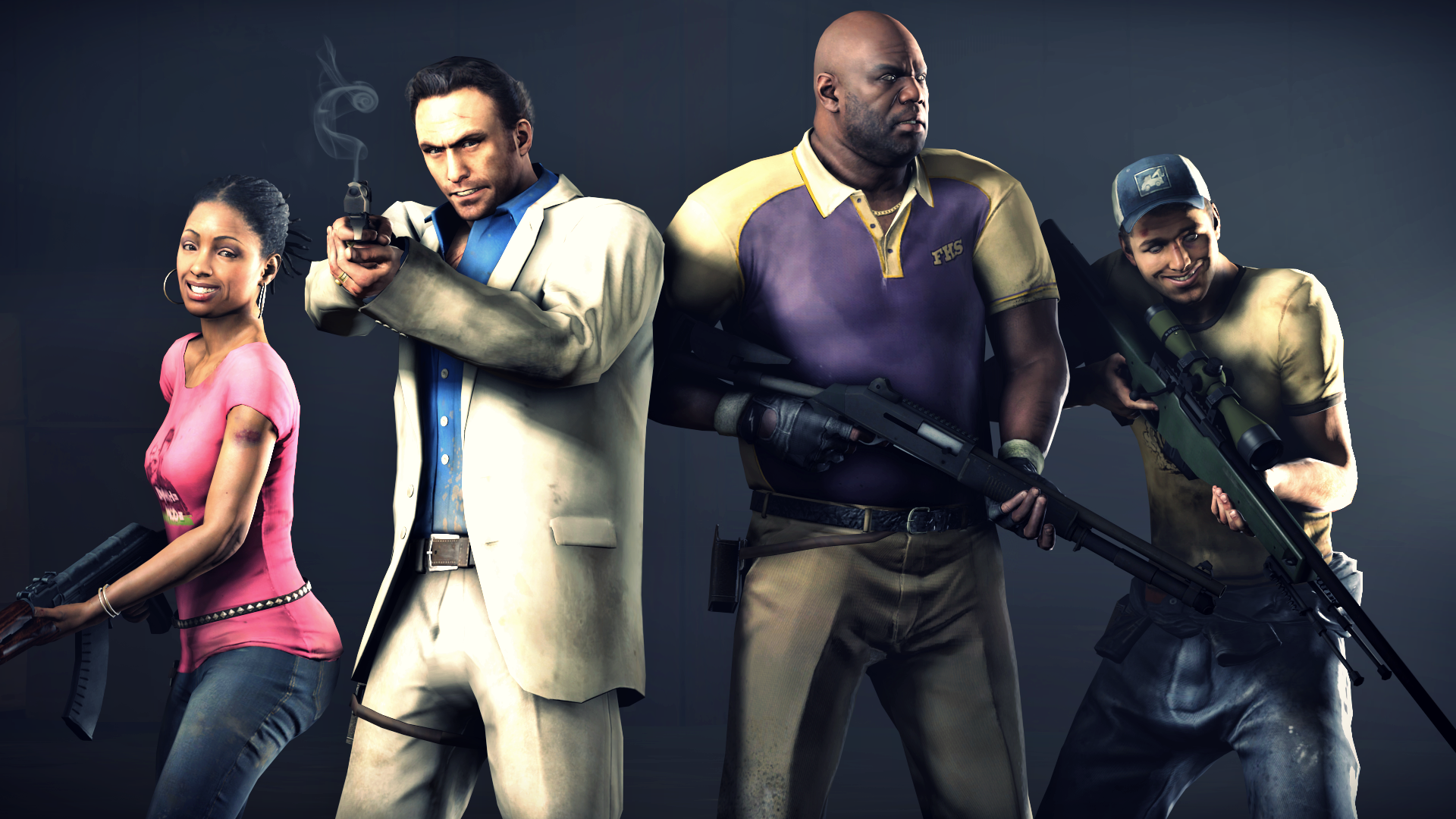
Left 4 Dead 2 is a cooperative first-person shooter video game developed and published by Valve Corporation. The sequel to Turtle Rock Studios's Left 4 Dead, the game was released for Microsoft Windows and Xbox 360 in November 2009, and for OS X in October 2010, and for Linux in July 2013.


Left 4 Dead 2 builds upon cooperatively focused gameplay and Valve's proprietary Source engine, the same game engine used in the original Left 4 Dead. Set during the aftermath of an apocalyptic pandemic, Left 4 Dead 2 focuses on four new Survivors, fighting against hordes of zombies, known as the Infected, who develop severe psychosis and act extremely aggressive. The Survivors must fight their way through five campaigns, interspersed with safe houses that act as checkpoints, with the goal of escape at each campaign's finale. The gameplay is procedurally altered by the "AI Director 2.0", which monitors the players' performance and adjusts the scenario to provide a dynamic challenge. Other new features include new types of special infected and an arsenal of melee weapons.

The game made its world premiere at E3 2009 with a trailer during the Microsoft press event. Prior to release, it received a combination of positive and negative critical and community reactions. It attracted an unusually high volume of pre-release controversy about the game's graphic content. In response, alterations were made to the cover art and both Australia and Germany refused to rate the unmodified edition at the time of release. After release however, the game was met with positive reviews by critics.

Like its predecessor, Left 4 Dead 2 is a first-person shooter with a heavy emphasis on cooperative gameplay. The game presents five new campaigns, each composed of three to five smaller levels. As in the first game, each campaign is presented in menus and loading screens as a film starring the four Survivors; and features, upon completing a campaign, a faux credits screen which acts as the final scoreboard for the players and recaps certain performance statistics for the group. In every campaign, most levels involve the Survivors attempting to reach a safe zone and close the door once they are all safely inside. However, the final level in each campaign requires the Survivors to call for rescue and either survive a prolonged onslaught until rescue arrives, pass through an especially challenging gauntlet of Infected to reach an escape vehicle, or (in Dead Center and The Passing) collect and utilize fuel cans to enable their escape.


Each Survivor can carry one each of five categories of equipment: primary weapons, secondary weapons, throwable weapons, major medical supplies (which also includes ammunition upgrades) and minor medical supplies. Primary weapons are broken down into four tiers based on their availability and attributes. Tier one weapons (such as the SMG and Chrome Shotgun) deal damage relatively slowly and serve as basic offensive weapons. Tier two weapons (such as the Assault Rifle and Combat Shotgun) deal damage faster and often appear in later maps of each chapter. The two tier three weapons (Grenade Launcher and M60) differ from tier one and two weapons both because of their rarity and because players cannot refill their ammunition from ammunition dumps. They deal damage quickly at the cost of limited ammo. Tier four weapons are all mounted weapon systems and carry unlimited ammunition. The mounted weapons deal damage the fastest, but at the cost of overheating after a period of non-stop use. The mounted weapons are in set positions in maps and have a fixed arc of fire. They cannot be given ammunition upgrades like other weapons and players cannot utilize the laser sights attachment with them. There are three types of secondary weapons available: melee weapons, small caliber pistols (that can be dual wielded) and large caliber pistols. Although melee weapons cause extra damage to Infected when struck, the Survivors can use any other weapon or item for weaker melee attacks that can push the Infected back. Players also carry a flashlight with infinite battery life, the use of which enables players to see in the dark (with the downside of the player gaining the attention of the Infected much faster). They may also carry a single first aid kit, special ammo pack, or a defibrillator in their major medical supply slot; in addition to either pain pills or an adrenaline shot in their minor medical supply slot. They may also carry a single throwable weapon—Molotov cocktails to set an area on fire; pipe bombs to attract any nearby Infected to the flashing light and sound it makes until it explodes; and jars of Boomer bile, which attracts Common Infected to whatever it hits (e.g. fires, Special Infected, each other).

To enable situational awareness of other Survivors, players are shown the health and status of their fellow survivors. If a player does not have direct sight of another Survivor (e.g. a wall is blocking their view of the others), they will be shown the Survivor's highlighted silhouette. The Survivors are also susceptible to friendly fire, forcing players to exercise caution when shooting or swinging their weapons. As Survivors take damage, they move more slowly; if a Survivor's health drops to zero, they are incapacitated and left to fight off the Infected using a handgun until rescued by another Survivor. If a Survivor dies, they remain dead until the next level, unless revived by a defibrillator, or, in Campaign or Singleplayer mode, reappear in a "Rescue Closet" to be freed by other Survivors. Should all Survivors die or be incapacitated, the game will end, at which point the players may restart that chapter or quit the game.

Read more about L4D2 here.

Team Fortress 2

Team Fortress 2 is a class-based first-person shooter game developed by Valve Corporation, and the sequel to Team Fortress Classic. There are two playable teams, RED and BLU, which you can enter and complete objectives in different game modes. You can choose from nine classes which are Scout, Medic, Demoman, Soldier, Heavy, Sniper, Spy, Pyro, and Engineer.


There are many game modes in Team Fortress 2.
(In no particular order)  # Capture The Flag (CTF): Capture the Flag is the game mode that is put in Team Fortress: Classic on the map, so it was sure to return in its sequel Team Fortress 2. As opposed to a flag, each team has to capture a briefcase (AKA The Intelligence). Both teams (RED and BLU) are required to take the enemy's suitcase to their base to win. It takes three captures from a single team to win a game.
  1. Control Point: The Control Point game mode consists of some tactical points on the map, which have to be taken by a team to win. A control point can only be captured by say, BLU if RED players are not on the point with them. Select control point maps may have some differences. For example, Dustbowl's first point of the first area cannot be recaptured once taken over.
  2. Attack and Defend: is a more complex version of Control Point, in which each map is divided into a number of closed sections, held between the two teams. Each round has one team attempting to seize control of the opposing team's capture point for that section in a certain amount of time. Once a team holds all but the enemy's home base point, they then attempt to capture the enemy base point while the enemy defends for a certain amount of time. The only official map made by Valve for Territorial Control is Hydro, presumably because of its complex design.
    TF2 Screen01-1-
  3. King Of The Hill is a map featuring a single control point that must be held by either team for three minutes each. Most of these maps are 'mirrored', the same visually on either side. E.g. Sawmill, Lakeside and Nucleus. The mechanics of capturing are identical to Control Points, however once a team has taken over from the other, their time is simply paused and not removed, allowing for the timer to resume if the point is recaptured.
  4. Payload is one of the main gamemodes in TF2, and arguably the most popular in casual games. This gamemode birthed many classic maps such as Upward, Badwater Basin, Frontier, Borneo and many others. BLU team's objective is to push a cart holding a bomb along tracks to the RED team's base. RED team's objective is to hold it off until time runs out. If BLU fail to push the cart at all for a certain amount of time(without pushing it or being near it for 30 seconds), it will automatically starts rolling back. There are usually multiple checkpoints along the tracks. Once the cart is pushed over one, time is added and the cart is unable to roll back over them. Once the bomb reaches and surpasses RED team's last point, the building will explode, killing most surrounding it. In a few maps, gravity effects the direction of the cart, but currently only in reverse. For example, the ramps in Thunder Mountain and Upward. The cart can only be pushed while RED is absent from the area around the cart. Each member of the BLU team that is surrounding the cart adds a +1 of pushing power to the cart (The scout has +2 pushing power by default and if the Demoman or Soldier equip the Pain Train as a melee weapon, they have +2 as well).
  5. Special Delivery is a hybrid version of Capture The Flag with only one briefcase containing Australium. The goal is to deliver the briefcase from the drop site to the rocket in the centre of the map. Only two official maps have been made for this gamemode; Doomsday and Carnival of carnage, the latter being an almost identical halloween version of the former. Once the Australium has been picked up by a team, it cannot be moved by the other team until it returns to the drop site after a certain amount of time on the ground. Once the it returns to the drop site, the Australium's team colour is neutral and can be picked up by anyone. In order to win the round, a team must bring the briefcase to the rocket and stay with it while the lengthy deployment procedure plays out. The rocket fires into the air, and quickly plummets to the ground in a large explosion, thus signifying the end of the rocket's single passenger, Poopyjoe The Monkeynaut.
  6. Mann vs. Machine: Mann vs. Machine is a CO-OP mode, where you can team up with 5 players/friends to fight against hordes of robots. Similar to the "Tower Defense", you must defend a specific spot from destruction by the robots. The robots channel through the map and you have to stop them from getting their "bomb" into your base. You can upgrade your weapons after every survived wave, though, the robot's bombs gain several attributes as well. The first level brings a defensive buff for all near robots, the second level brings a healing buff and in the third one all robots have permanently critical hits. The robots must not place the bomb at the target place, otherwise the game is lost. To win the mission, you have to survive all waves. Successfully defend Mann Co. and will receive item/items as reward after each mission is completed! Completing a special aumont of missions (counted as tour) grants Botkiller weaponskillstreak fabricator or an/multiple Australium weapons (THIS GAMEMODE REQUIRES A PAID "TICKET)!
  7. Alternate: Alternate is a game mode that starts a random game that is not found in any other game mode. The most popular game mode in alternate consists of an alien ship. You have to charge up the ship using fuel. Fuel is collected by killing members of other teams. Once you collect fuel, you wait for the alien ship to appear above and then you fill the ship. First one to fill the ship wins.


You can get Team Fortress 2 on Steam for free!

Battlefield 1942

Battlefield is a series of first-person shooter video games that started out on Microsoft Windows and OS X with Battlefield 1942, which was released in 2002. The series is developed by Swedish company EA DICE and is published by American company Electronic Arts. The series features a particular focus on large maps, teamwork and vehicle warfare. The PC games in the series are mainly focused on online multiplayer. The Battlefield series has been played by more than 50 million players worldwide as of 2012, across 11 games and 12 expansion packs released since its inception in 2002.

Battlefield series games usually focus on large, online multiplayer battles (with the exception of Battlefield Hardline). Playing in squads has become a major element of games in the series. Since Battlefield 2, the series centrally record online stats for each player, allowing the players to receive rank promotions and weapon unlocks based on their stats as well as awards such as medals, ribbons and pins. A class system has been present within all the Battlefield games. Each class features a different type of primary weapon along with different equipment, differentiating roles on the battlefield. The ability to engage other players in melee combat with a knife has been present in Battlefield games. Since Battlefield 2142, the series has included an award of dog tags for each player killed using a knife.

Battlefield 1942 (also known as BF1942) is the first installment in the Battlefield series and was developed by DICE. It was released for PC in 2002 and was later made the AIAS and IGN Game of the Year. To celebrate the game's ten year anniversary, it was made available for free on Origin in November 2012.

Battlefield 1942 is set during World War II in the Pacific, European and Northern African theaters. Its gameplay has a more cooperative focus than previous games in the first person shooter genre, as it is not only important to kill the opposition but to also hold certain "control points" around the map while playing a multitude of classes each equipped for special roles.

Capturing control points allow the team to reinforce themselves by enabling players and vehicles to spawn in the vicinity of the control point. Consequently, capturing and controlling these points also will reduce enemy reinforcements. Battlefield 1942 was one of the first mainstream games to represent a dramatic shift in FPS gameplay mentality by not only favoring individualism but simultaneously encouraging teamwork and coordination.

You can read more here.