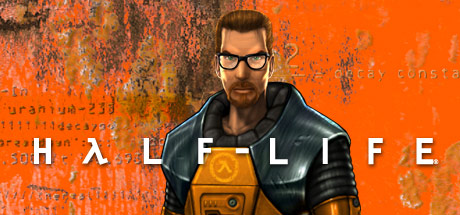
In Half-Life, players accept the part of the hero, Dr. Gordon Freeman, an ongoing MIT graduate in hypothetical material science, and furthermore an ongoing representative at Black Mesa. After an examination that goes awfully astray when a surprising Resonance Cascade (an obviously totally invented event) tears dimensional creases that decimate the office, Gordon must battle to get away from the now outsider swarmed office as animals from a different universe — known as Xen — accordingly enter in regularly expanding numbers through these dimensional creases.
The amusement is set amid May 200-in a remote zone of New Mexico, USA at the Black Mesa Research Facility; an anecdotal complex that bears numerous similitudes to both the Los Alamos National Laboratory and Area 51.
As Freeman attempts to advance out of the demolished office to discover help for the harmed, he before long finds he is gotten between two sides: the unfriendly outsiders, and the Hazardous Environment Combat Unit, a military power dispatched to conceal the occurrence — including wiping out Freeman and whatever is left of the Black Mesa Science Team. All through the amusement, a secretive figure known as the G-Man frequently shows up, obviously checking Freeman's advance. At last, Gordon utilizes the collaboration of surviving researchers and security officers to work his way to the secretive Lambda Complex, where a group of researchers transport him to the outsider world Xen, where he should crush the Nihilanth, the animal keeping Xen's side of the dimensional break open.
A large portion of Life's plot was initially propelled by the PC amusements Doom and Quake (both created by id Software), Stephen King's novella The Mist, and a scene of The Outer Limits called "The Borderland". Valve's in-house essayist and writer, Marc Laidlaw, who composed the books Dad's Nuke and The 37th Mandela, later created and extended the plot. In any case, the most particular part of the diversion isn't simply the plot, but instead the way it is exhibited to the player.
The diversion recounts the story by streaming into scripted groupings that are incorporated as a major aspect of the amusement instead of as cutscene interludes. These arrangements run from the presentation of real plot focuses, for example, the Resonance Cascade to bringing the player into an especially troublesome piece of a level. Two of the planned consequences of this style of introduction were to expand drenching and to keep up a ceaseless account that keeps the player's enthusiasm all through. This varied from diversions at the time, making Half-Life unmistakable, and characterizing traditions that would keep going for quite a long time to come.
Valve executed different elements to increase the sentiment of drenching, for example, keeping the player from seeing or hearing their own character, who remains a quiet hero all through the amusement, and guaranteeing that the player once in a while loses the capacity to control Gordon, notwithstanding amid monologs. This steady understanding of the diversion enabled players to absolutely satisfy and alter, nearly, the part of Gordon, while telling them their identity playing as. The scripted groupings keep up stream by keeping the player inundated in the amusement, though cutscenes in other contemporary recreations had frequently been a redirection from past sections of gameplay. The levels for Half-Life were likewise isolated into little segments to limit long interferences from stacking.

No comments:
Post a Comment