Sunday, July 15, 2018

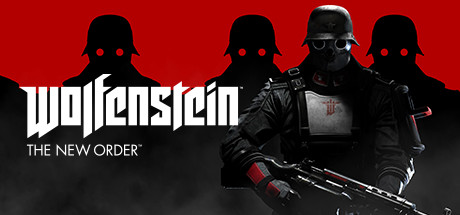
Wolfenstein: The New Order

Wolfenstein: The New Order is the ninth portion and delicate reboot of the Wolfenstein arrangement, created by MachineGames and distributed by Bethesda Softworks. It is the semi-spin-off of 2009's Wolfenstein (anyway uses next to no from the diversion and drops any immediate references to cloak or heavenly) and uses id Software's exclusive amusement motor id Tech 5. The diversion was discharged on May 20, 2014 for the PlayStation 3, PlayStation 4, Xbox 360, Xbox One and Microsoft Windows.

Unlike previous games, it does not have a multiplayer component.

The diversion is a solitary player first-individual shooter created by MachineGames situated in Uppsala, Sweden; the studio was gained by ZeniMax in 2010. Wolfenstein: The New Order was their first created title. It is the ninth portion in the Wolfenstein arrangement yet just the primary completely without the Id Software name. It is created to a great extent by ex-individuals from Starbreeze, most known for The Chronicles of Riddick computer games arrangement and The Darkness.

Wolfenstein: The New Order is an activity experience shooter amusement played from a first-individual point of view. To advance through the story, players fight foes all through levels. The amusement uses a wellbeing framework in which players' wellbeing is partitioned into isolated areas that recover; if a whole segment is lost, players must utilize a wellbeing pack to recharge the missing wellbeing.

Players may seek shelter behind articles amid firefights, utilizing it as a strategic favorable position and to abstain from taking harm from foes. Players utilize scuffle assaults, guns and explosives to battle foes, and may run, bounce and at times swim to explore through the areas. Skirmish assaults can be utilized to quietly bring down adversaries without being recognized. On the other hand, players can snare foes, which regularly brings about an exceptional firefight between the two gatherings.


In battle, a cover framework can be utilized as help against adversaries. Players can lean around, finished, and under cover, which can be utilized as a strategic favorable position amid shootouts and stealth levels. The amusement gives players a wide assortment of weapon alternatives—they can be found on the ground, recovered from dead foes, or expelled from their stationary position and bore. Weapon ammo must be physically recovered starting from the earliest stage from dead foes. Players approach a weapon stock, which enables them to convey the same number of weapons as they find. With a portion of these weapons, players can double employ, giving them leverage over foes by managing twice as much harm. Players can likewise alter weapons using updates; for instance, a rocket launcher can be connected to the side of an attack rifle, and a laser gun can be changed into a wire cutting device.

Monday, July 2, 2018

Destiny

Destiny is a role-playing first person shooter video game developed by Bungie and published by Activision for the PlayStation 3, PlayStation 4, Xbox 360, and Xbox One consoles. It was released on September 9, 2014 everywhere outside Japan, where it was released on September 11, 2014 and only for the PlayStation 3 and PlayStation 4.

Bungie and Activision depict Destiny as a "common world shooter," expressing that the amusement truly does not fit solidly into different classifications, for example, FPS, RPG, or MMO. The diversion can be played solo or in little gatherings called "fireteams" if the player picks, with huge parts of the diversion utilizing matchmaking to guarantee that the player is once in a while alone. Headway in the diversion centers around acquiring logically more ground-breaking gear, with negligible dependence on different players to advance.

The diversion starts with the player's Ghost reviving them as a Guardian, in the wake of having been dead for an obscure time allotment. The Guardian is immediately compelled to battle Fallen who have occupied the vestiges of the adjacent Cosmodrome in Old Russia. The Guardian, with the guide of their Ghost, can anchor a jumpship and get away to The Tower that houses the Guardians on The City outskirt.

In the wake of being equipped and acquainted with the Vanguard, and Gunsmith, the team gain from Amanda Holliday that their Arcadia Class Jumpship is feeling the loss of it's Warp Drive, a part essential for interplanetary travel. Because of the shortage of the part and flyable jumpships all in all, the Guardian is compelled to come back to where they found the ship trying to discover the part.

When they come back to the Cosmodrome, the team start their inquiry. They rapidly gain from an old terminal that there might be a Warp Drive where they first found the jumpship, in Dock 13. As the Guardian approaches, their Ghost identifies a Warp Drive, which has lamentably as of now been rummaged by the Fallen. With no other practical alternative, the Guardian pushes forward and draws in the Fallen, vanquishing the Fallen Archon, Riksis all the while.

Upon their to The Tower, the pair meets The Speaker, who clarifies how The Traveler, in its withering breath, made the Ghosts to search out the individuals who can use its Light as a weapon, to secure mankind against the secretive power known as The Darkness, which disabled The Traveler in its last experience. He at that point clarifies how The Darkness has returned and that humankind won't survive this time. The Guardian, needing to help, is advised to join the others battling back against The Darkness on Earth and past.

Friday, June 29, 2018

Metro 2033

Metro 2033 is a Post-Apocalyptic Survival-Horror and First Person Shooter video game based on the novel of the same name, Metro 2033, by Russian author Dmitry Glukhovsky. The Ukrainian developing company, 4A Games, and former publishers of the series THQ collaborated with Dmitry Glukhovsky to create a digital rendition of his novel for the Xbox 360 and PC platforms. Originally, the game was to be released with the subtitle: The Last Refuge, but the subtitle was later cancelled.


Metro 2033 is a straight shooter occurring in the Post-Apocalyptic Metro System of Moscow, 20 years after the staggering World War III. In-diversion, the player takes control of a man named Artyom who must advance through the aggressor, changed, and paranormal risks of the dim metro, on the off chance that he is to spare his home station from another mutant danger originating from the surface. 

As a matter of first importance a First Person Shooter, along the way the player must utilize a huge number of dystopian themed weaponry to execute a wide assortment of adversaries. Battle is for the most part between two structures, that of shootouts with human rebels having a place with the Moscow Metro's different activist groups - and that of gunplay with savage transformed animals that chase and close in on Artyom for tense snapshots of short proximity battle. Weapons in this amusement primarily comprise of stopgap and unrefined, yet compelling weapons. Survival is a fundamental subject of the amusement, and keeping in mind that peril is dependably around the bend, the rummaging and protection of ammo in and between snapshots of battle end up indispensable. The diversion has a few sorts of ammo that for the most part fall into two classes: the consistent rounds, which are filthy slugs made in the metro, and military-review rounds, which were produced before the war. These military review rounds release higher harm yield as well as fill in as the amusement's money for when Artyom is acquiring things in a significant number of the diversion's protected stations. This requires the player to settle on savvy choices in the matter of when, where, and how they utilize their ammunition and furthermore when to set up their ammunition. 

Metro 2033 utilizations an extremely constrained heads up show (HUD) component to keep to a more "sensible" and "immersive" experience. As opposed to utilize a wellbeing bar, blood splatters on the screen show how much harm is being perpetrated on Artyom, and his gas cover will haze up in radioactive zones, indicating Artyom with reference to what extent until the point when another channel is required. With a specific end goal to survive, the player should continually know about the diversion's unpretentious markers. Artyom must utilize a wrist watch to know to what extent he can utilize channels for, or when the player needs to check their heading, they should check a compass. 

The diversion is narratively determined, in that consistently the player is looking to advance through the amusement's level to achieve another portion of the diversion's story. The amusement, in any case, highlights two endings that are given to the player in light of a concealed arrangement of Moral Points, which unobtrusively compensate players for carrying on selflessly or with interest - generally without them notwithstanding acknowledging it. Along these lines stealth comparatively, assumes a vital part in gameplay. Because of the way that Artyom is as often as possible dwarfed or, later on, without anyone else, almost all human-based levels highlight backup ways to go that can be utilized to sneak past adversaries, and safeguard not simply ammo, but rather adversary lives. In the event that Artyom does not shed blood unnecessarily, the player is probably going to be remunerated.


Thursday, June 28, 2018

Counter-Strike

Counter-Strike (also marketed as Half-Life: Counter-Strike) is a multiplayer first-person shooter initially created by Minh Le and Jess Cliffe as a mod for Half-Life. By the fifth beta, Valve Software started actively participating in the development and ultimately bought the rights to the game and offered the original developers jobs at the company which both of them accepted.

After about a year in Beta stages, the first full release of the mod was published on November 9, 2000 and the game was also available at retailers in North America shortly thereafter, on November 14, 2000.

Since the creation of the franchise, various sequels and spinoffs have been created, such as Counter-Strike: Condition Zero, Counter-Strike: Source, and the latest in the series, Counter-Strike: Global Offensive.


The quick paced and group situated gameplay of Counter-Strike has stayed moderately the same consistently. In it, two groups, the Counter-Terrorists and the Terrorists, battle to finish a goal or wipe out the restricting group. Albeit fundamental, it is viewed as a standout amongst the most progressive web based diversions ever. The first Counter-Strike came solely with multiplayer, without PC controlled players. After some time, in any case, a few server-side adjustments have included bots for in-diversion utilize and bots were authoritatively presented in its later successors, Counter-Strike (Xbox) and Counter-Strike: Condition Zero.

Counter-Strike includes a vast assortment of maps that occur in various situations including urban, ice, wilderness and desert settings. Amid the post-beta stages, maps were as yet turned in the official circulation on a marginally littler scale. Since the arrival of Counter-Strike 1.6, no maps have been included or expelled from the diversion.

It ought to be noticed that the greater part of maps for the amusement were made by individuals that were initially just specialist mappers. At the point when Valve Software later purchased the rights to Counter-Strike and its substance these turned into the principal works distributed at retail for a significant number of the level designers.

Counter-Strike includes an assortment of weapons, running from blades to shotguns and submachine firearms. The weapons for Counter-Strike were picked essentially in view of two criteria. For one, the weapons must fulfill to utilize and they needed to look and sound cool. The other criteria was authenticity and what weapons the groups would probably be utilizing as a part of reality. The previous of these criteria was given more weight than guaranteeing authenticity.

Motivation for potential weapon hopefuls were taken from different movies. For instance, the film Ronin roused the incorporation of the Krieg 552 and M249. Further motivation was additionally taken from the motion pictures Air Force One and the Professional.

The majority of the data with respect to the weapons themselves was sourced from the web or from firearm magazines. Because restricted data was accessible in regards to a portion of the weapons, Minh Le needed to think about how a few weapons could have worked while enlivening them and therefore a couple of weapon models show contrasts when contrasted with their true counterparts.

Counter-Strike outstandingly includes left-gave weapon see models. These models were made as left-gave in light of the fact that the maker of these models and the primary man behind Counter-Strike, Minh Le, is left-given and subsequently favored vitalizing the weapons from that side. The diversion includes a probability of changing the models to right-gave, yet as the models are basically reflected from their left-gave partners they sport a few mistakes when contrasted with their genuine partners.


In case you want to start playing this game you can download Counter-Strike 1.6!

Half-Life

Half-Life, adapted as HλLF-LIFE, is a sci-fi first-individual shooter created and distributed by Valve. The player takes the viewpoint of researcher Gordon Freeman. Planned at first for Microsoft Windows and later brought to different stages, for example, PS2 and OS X, the diversion utilizes a vigorously changed rendition of the Quake motor, called GoldSrc.

In Half-Life, players accept the part of the hero, Dr. Gordon Freeman, an ongoing MIT graduate in hypothetical material science, and furthermore an ongoing representative at Black Mesa. After an examination that goes awfully astray when a surprising Resonance Cascade (an obviously totally invented event) tears dimensional creases that decimate the office, Gordon must battle to get away from the now outsider swarmed office as animals from a different universe — known as Xen — accordingly enter in regularly expanding numbers through these dimensional creases.

The amusement is set amid May 200-in a remote zone of New Mexico, USA at the Black Mesa Research Facility; an anecdotal complex that bears numerous similitudes to both the Los Alamos National Laboratory and Area 51.

As Freeman attempts to advance out of the demolished office to discover help for the harmed, he before long finds he is gotten between two sides: the unfriendly outsiders, and the Hazardous Environment Combat Unit, a military power dispatched to conceal the occurrence — including wiping out Freeman and whatever is left of the Black Mesa Science Team. All through the amusement, a secretive figure known as the G-Man frequently shows up, obviously checking Freeman's advance. At last, Gordon utilizes the collaboration of surviving researchers and security officers to work his way to the secretive Lambda Complex, where a group of researchers transport him to the outsider world Xen, where he should crush the Nihilanth, the animal keeping Xen's side of the dimensional break open.

A large portion of Life's plot was initially propelled by the PC amusements Doom and Quake (both created by id Software), Stephen King's novella The Mist, and a scene of The Outer Limits called "The Borderland". Valve's in-house essayist and writer, Marc Laidlaw, who composed the books Dad's Nuke and The 37th Mandela, later created and extended the plot. In any case, the most particular part of the diversion isn't simply the plot, but instead the way it is exhibited to the player.


The diversion recounts the story by streaming into scripted groupings that are incorporated as a major aspect of the amusement instead of as cutscene interludes. These arrangements run from the presentation of real plot focuses, for example, the Resonance Cascade to bringing the player into an especially troublesome piece of a level. Two of the planned consequences of this style of introduction were to expand drenching and to keep up a ceaseless account that keeps the player's enthusiasm all through. This varied from diversions at the time, making Half-Life unmistakable, and characterizing traditions that would keep going for quite a long time to come.

Valve executed different elements to increase the sentiment of drenching, for example, keeping the player from seeing or hearing their own character, who remains a quiet hero all through the amusement, and guaranteeing that the player once in a while loses the capacity to control Gordon, notwithstanding amid monologs. This steady understanding of the diversion enabled players to absolutely satisfy and alter, nearly, the part of Gordon, while telling them their identity playing as. The scripted groupings keep up stream by keeping the player inundated in the amusement, though cutscenes in other contemporary recreations had frequently been a redirection from past sections of gameplay. The levels for Half-Life were likewise isolated into little segments to limit long interferences from stacking.